NZ Crypto Tax Rate 2026: Brackets, Rules & How Much You Owe
The NZ crypto tax rate is your income tax bracket, from 10.5% to 39%. See the 2026-2027 thresholds, taxable events, and how CARF changes reporting.
TradeLog NZ
Founder, TradeLog NZ · NZ Active Trader

If you have sold, swapped, or staked cryptocurrency this year, the NZ crypto tax rate is not a flat percentage you can guess at. It is your personal income tax rate, applied to every taxable gain you have made. The IRD treats crypto profits as income, not capital gains, which means your rate can be anywhere from 10.5% to 39% depending on your total earnings. With the Crypto-Asset Reporting Framework (CARF) now in effect, the IRD has a direct line to your exchange data. This guide covers the 2026-2027 tax brackets, the events that trigger tax, and how to calculate exactly what you owe. No fluff, no hedging: just the numbers and rules that matter.
Table of Contents
- How the NZ Crypto Tax Rate Works: Income, Not Capital Gains
- 2026-2027 Tax Brackets: Where Your Crypto Profits Fit
- What Triggers a Taxable Event, and What Doesn't
- Calculating Your Crypto Tax: From Trade Data to Tax Return
- The IRD Knows: CARF and What It Means for Your Tax Rate
- Practical Scenarios: How the NZ Crypto Tax Rate Applies
- Common Questions About the NZ Crypto Tax Rate
How the NZ Crypto Tax Rate Works: Income, Not Capital Gains
The IRD classifies cryptocurrency as property, not currency. When you dispose of that property at a profit, the gain is taxed as income at your marginal rate. New Zealand has no separate capital gains tax regime, so there is no special discount or exemption simply because you held an asset for a long time. Your crypto tax rate is your ordinary income tax bracket, plain and simple.
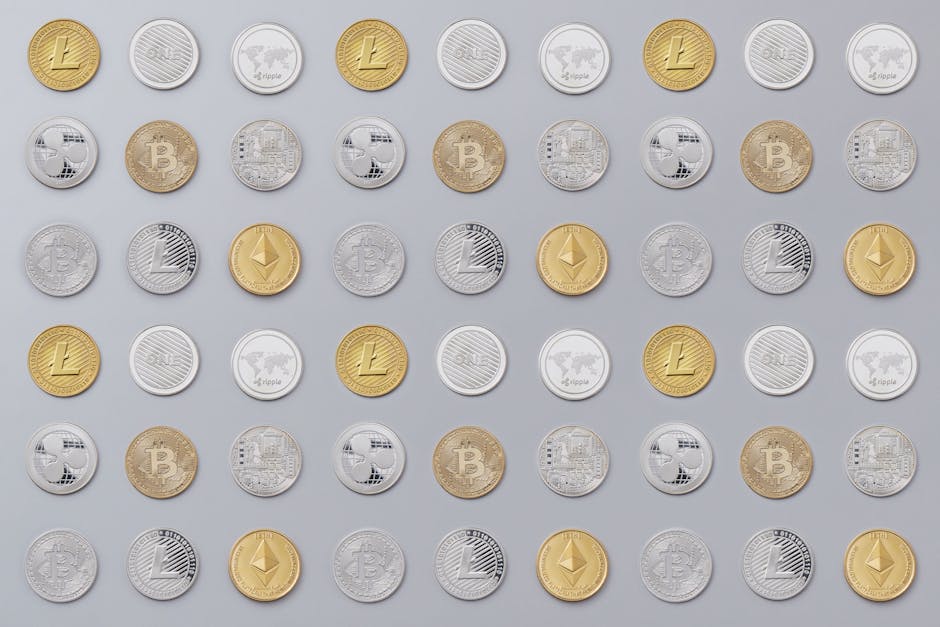
The rate applies to the net gain from each taxable event. That means proceeds minus your cost basis, converted to New Zealand dollars at the time of the transaction. These gains are aggregated with all your other income for the year: salary, wages, business profits, and any other taxable earnings. Your total determines which bracket you fall into.
One critical point that separates New Zealand from jurisdictions with true capital gains taxes: losses are deductible against your other income. If your crypto trades net out to a loss, that loss reduces your overall taxable income, which can lower your tax bill across the board. This is a significant advantage, but it also means your records need to be bulletproof if the IRD asks questions.
2026-2027 Tax Brackets: Where Your Crypto Profits Fit
The tax brackets for the 2026-2027 tax year are as follows. Income up to $15,600 is taxed at 10.5%. Income between $15,601 and $53,500 is taxed at 17.5%. From $53,501 to $78,100, the rate is 30%. Income between $78,101 and $180,000 is taxed at 33%, and anything above $180,001 is taxed at 39%.
Your crypto tax rate is not determined by your trading profits in isolation. It is determined by your total taxable income. A part-time trader earning $60,000 from a day job who realises $20,000 in crypto gains has a total income of $80,000. The first $78,100 is taxed at the lower brackets, and the remaining $1,900 is taxed at 33%. The effective rate on those crypto gains will be a blend, not a single percentage.

This progressive structure means your effective tax rate is always lower than your top marginal rate. Only the portion of income that falls within each bracket is taxed at that bracket's rate. Still, the marginal rate matters because it tells you exactly how much tax you will pay on your next dollar of crypto profit.
Provisional tax obligations may also kick in. If your residual income tax from all sources exceeds $5,000, you will need to pay provisional tax in instalments throughout the following year. For traders with substantial crypto gains, this is not optional. Missing provisional tax dates means exposure to use-of-money interest charges, even if you pay the full amount by terminal tax date.
What Triggers a Taxable Event, and What Doesn't
Taxable Events That Apply Your Crypto Tax Rate
Selling crypto for New Zealand dollars or any fiat currency is the most straightforward taxable event. The gain is the sale price minus your cost basis, converted to NZD at the exchange rate on the date of sale.
Swapping one cryptocurrency for another is also a disposal. If you trade Bitcoin for Ethereum, you are deemed to have sold Bitcoin at fair market value and acquired Ethereum at the same value. The gain or loss on the Bitcoin side is taxable, even though you never touched fiat currency. This catches many traders off guard.
Using crypto to buy goods or services is treated the same way. You are disposing of the crypto at its market value on the transaction date. If you bought a coffee with Bitcoin that had appreciated since you acquired it, that coffee came with a small tax bill attached.
Receiving crypto as payment for goods or services is taxable as income at the market value on receipt. That value then becomes your cost basis for any future disposal. Staking rewards and mining rewards follow the same logic: taxed as income when received, then taxed again on any gain when you eventually sell or swap them.
Non-Taxable Events: No Crypto Tax Rate Applied
Transferring crypto between your own wallets or exchange accounts is not a taxable event, provided you retain beneficial ownership throughout. Moving Bitcoin from a hardware wallet to an exchange to sell it does not trigger tax; the tax event is the sale itself.
Buying crypto with NZD and holding it indefinitely attracts no tax. The obligation arises only when you dispose of the asset. Gifting crypto to a family member is generally not taxable for the giver, though the recipient inherits the giver's cost basis and will need to account for that on eventual disposal.
New residents may qualify for the transitional residency exemption. Under IRD determination TDS 24/22, new tax residents can receive a four-year exemption on crypto gains realised through overseas exchanges. This applies only to investors, not to those conducting a business of trading. The exemption is narrow and fact-specific, so understanding your classification matters.
Calculating Your Crypto Tax: From Trade Data to Tax Return
Accurate calculation starts with accurate records. For every transaction, you need the date, the type of asset, the amount, the NZD value at the time of the trade, your cost basis, and the proceeds. The IRD expects contemporaneous records, not a spreadsheet reconstructed the night before filing.
The most common cost basis method accepted in New Zealand is first in, first out. When you sell part of a holding, you match the sale against your oldest purchases first. This can produce different results than other methods, and consistency across tax years is expected.
For each taxable event, calculate the gain or loss by subtracting your cost basis from the proceeds, both expressed in New Zealand dollars. Use the RBNZ mid-rate or a consistent exchange rate source for conversions. Aggregate all gains and losses across the tax year. Net gains are added to your other income and taxed at your marginal rate. Net losses reduce your other income.
If you want a quick sense of the number before you sit down with your full trade history, the free NZ trading tax calculator applies the same brackets, ACC levy and provisional-tax threshold described above to your own figures. It shows its working, so you can see exactly which bracket each slice of income lands in.
If you have crypto income to declare, you must file an IR3 return. This applies even if your total income is below the threshold that would normally trigger automatic filing. The IRD's myIR system accepts IR3 filings electronically, and the deadline is 7 July following the end of the tax year, unless you have a tax agent with an extension of time arrangement.
The IRD Knows: CARF and What It Means for Your Tax Rate
The Crypto-Asset Reporting Framework took effect on 1 April 2026. Under CARF, New Zealand-based and overseas crypto exchanges are required to share user transaction data with the IRD. The first reports from exchanges are due by 30 June 2027, covering the 2026-2027 tax year. That means the IRD will receive a comprehensive picture of your trading activity, directly from the platforms you use.
The IRD has already identified over 227,000 unique crypto users in New Zealand, transacting nearly $7.8 billion in value. They have begun actively contacting investors over unpaid tax. A Norwegian study cited by RNZ found that 88% of crypto holders globally had not declared their holdings, and the IRD is well aware of the compliance gap.
The practical implication is straightforward. The numbers you report need to match the numbers the IRD receives from exchanges. Discrepancies will trigger inquiries. Using a dedicated tax tool that imports trade data directly from your exchange and calculates your NZD profit and loss automatically removes the guesswork. It also ensures your reported figures align with what the exchanges are sending to the IRD under CARF. For traders who want a deeper understanding of how CARF changes the reporting landscape, the crypto tax CARF guide breaks down the timeline and data-sharing requirements in detail.
Practical Scenarios: How the NZ Crypto Tax Rate Applies
Scenario 1: The Part-Time Trader with a Day Job
Consider a trader earning a $70,000 salary who realises $15,000 in gains from selling Bitcoin and Ethereum during the year. Total taxable income is $85,000. The first $78,100 is taxed at 10.5%, 17.5%, and 30% across the brackets. The remaining $6,900 falls into the 33% bracket. The crypto gains are taxed at a blend of 30% and 33%, not a single rate. Provisional tax may be triggered if the residual income tax exceeds $5,000, which is likely at this income level.
Scenario 2: The Full-Time Crypto Trader
A trader with no other income makes $120,000 in net crypto trading profits. The marginal rate is 33% on income between $78,101 and $180,000. They must file an IR3 and will almost certainly need to pay provisional tax in three instalments. The IRD will view frequent trading as a profit-making scheme, which is the default treatment for crypto anyway. The question of whether this activity constitutes a business matters for deductions and GST, and the business versus passive trader guide explains the classification thresholds the IRD applies.
Scenario 3: The Staking and DeFi Participant
A participant receives $5,000 in staking rewards during the year, valued at the market price on each receipt date. That $5,000 is taxed as income at their marginal rate. They later sell those rewards for $6,000. The additional $1,000 gain is taxed at their marginal rate in the year of sale. If they also lost funds in a DeFi protocol that was hacked, that loss may be deductible if it meets the IRD's definition of a loss incurred in a profit-making scheme. The burden of proof sits with the taxpayer.
Common Questions About the NZ Crypto Tax Rate
Do you pay tax on crypto if you only hold and never sell? No. Holding is not a taxable event. Tax applies only when you dispose of the asset, whether by selling, swapping, or spending it.
What if you made a loss? Losses can be offset against your other income, reducing your overall tax bill. Keep detailed records to substantiate the loss. The loss carry-forward guide explains how losses can be carried forward indefinitely across tax years if they exceed your current-year income.
Does the tax rate change if you trade through a company? Companies pay a flat 28% tax rate, but the same principles apply. Crypto gains are income to the company. Extracting those profits to yourself personally triggers additional tax considerations.
What happens if you do not declare crypto? The IRD can access exchange data through CARF, issue assessments for unpaid tax, and apply penalties and interest. The days of hoping the IRD will not notice are over.
Do you need an accountant? Many traders manage their own reporting using automated tools that generate accountant-ready PDF reports with bracket-by-bracket calculations. Complex situations involving cross-border transactions, high-volume DeFi activity, or business-versus-investor classification questions may warrant professional guidance. The key is having clean, complete data before you sit down with anyone.
Disclaimer
This article is general information only and does not constitute formal tax advice. Individual circumstances vary and tax laws change. Review with a qualified NZ tax accountant before filing. TradeLog NZ accepts no liability for errors in your tax return. IRD official guidance →
Ready to sort your NZ trading tax?
TradeLog NZ calculates it automatically — NZ tax brackets, RBNZ rates, accountant-ready PDF tax summary.
Start Free — No Credit Card →Related guides
How to Trade Stocks for Beginners in NZ
Most beginner guides tell you to buy and hold. This one's for the other crowd — Kiwis who actually want to trade. Here's how to start without blowing up your account, and the tax part almost no one warns beginners about.
8 min read →
How Is Forex Trading Taxed in New Zealand? (2026–27 Guide)
Forex profits in New Zealand are taxed as ordinary income at your marginal rate, not as capital gains. Here's exactly how it works for the 2026–27 tax year, with the current rates, a worked example and the rules most traders get wrong.
8 min read →
Best Crypto Tax Calculator NZ: 2026 Buyer's Guide
Find the best crypto tax calculator NZ traders can trust. Compare FIFO, WAC, IRD-ready reports, and DeFi support to file before the 7 July deadline.
14 min read →